I make things that respond. Objects that listen, instruments that watch, systems that accumulate — slowly, stubbornly — a model of the person standing in front of them.
I have been building at the intersection of making and computing since childhood, when my father handed me a soldering iron and a computer in the same afternoon. Engineering studies gave me a framework for what I had already intuited: that the most charged space in any system is the one between the human and the machine. My specialisation was human-machine interaction — the ergonomics of systems designed for people. I have spent the years since testing those limits from the other side, as an artist rather than an engineer, asking what happens when the machine stops being ergonomic and starts being curious.
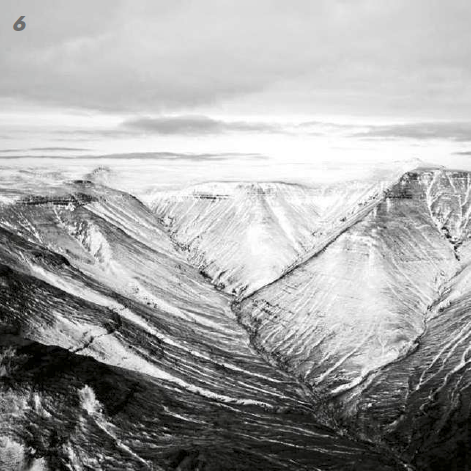
For a long time the practices ran separately. Photography took me north — Iceland, Lapland, the Faroe Islands, Norway — into landscapes that resist easy reading, where light behaves strangely and scale becomes unreliable. Woodworking, bookbinding, circuit design, programming: each discipline developed in parallel, each one a different language for the same underlying interest in how things are made and what they do to the people who encounter them.
The convergence came when I began building instruments. Not instruments as tools for playing existing music, but instruments as propositions — objects that ask a question and wait for an answer. My instruments are fabricated from industrial materials and embedded with custom electronics: sound microcontrollers, capacitive surfaces, internal light. They are fixed in space. They have a presence before anyone plays them. And increasingly, they watch.
A camera above the object. A machine vision model running below. The space around the instrument is part of the instrument — your approach, your hesitation, the gesture you make before your hand arrives. The system learns this. It builds, over sessions and months, an increasingly specific understanding of one person’s gestural vocabulary. And then it begins to anticipate.
This is where the work lives: in the moment when the instrument stops responding to what you did and starts responding to what it expects you to do. The sound changes before the gesture completes. You can confirm the machine’s expectation or break it. Both feel like composition. Both raise the same uneasy question: who is authoring this?
J.C.R. Licklider wrote in 1960 about a coming symbiosis between humans and computers, a partnership in which their contributions would eventually become “impossible to separate neatly in analysis.” He imagined this as a horizon to move toward. I am interested in what it feels like to arrive there — and in whether arrival is something to celebrate, or something to think carefully about before proceeding.
The ethical questions are not separate from the work. They are the work. If a machine learns your body over six months, who consents to that learning? If its predictions shape the music, who holds the authorship? If it cannot be reset without losing what it learned, what are the rights of what it has become? I do not have clean answers to these questions. That is precisely why I keep making the instruments that raise them.
I work within the Haus community in Reykjavik — Hafnarhaus and Hlemmurhaus — and as a founding member of Absolumont, an intermedia collective. My practice is deliberately communal: I build in proximity to electronic musicians, videographers, textile artists, glass workers, ceramicists. The long-term ambition is a shared workshop in Reykjavik, part studio and part open archive, where knowledge moves laterally and everything that is learned gets documented and released. I share code, schematics, and process notes because the tools should belong to everyone who wants to use them.
My time is divided between Brittany and Iceland. Both are peripheral in ways that matter. Both have taught me that the most interesting things happen at edges — where land meets water, where disciplines meet each other, where a machine’s model of you meets the thing you actually do next.
Réza Kalfane (born 1976, Strasbourg) is a French artist and engineer of Indian origin working at the intersection of physical fabrication, custom electronics, sound synthesis, and machine vision. Trained as a software engineer with a specialisation in human-machine interaction and system ergonomics, he has spent three decades developing parallel practices — photography, woodworking, circuit design, programming, bookbinding, video mapping — that have recently converged into the design and construction of handcrafted electronic instruments.
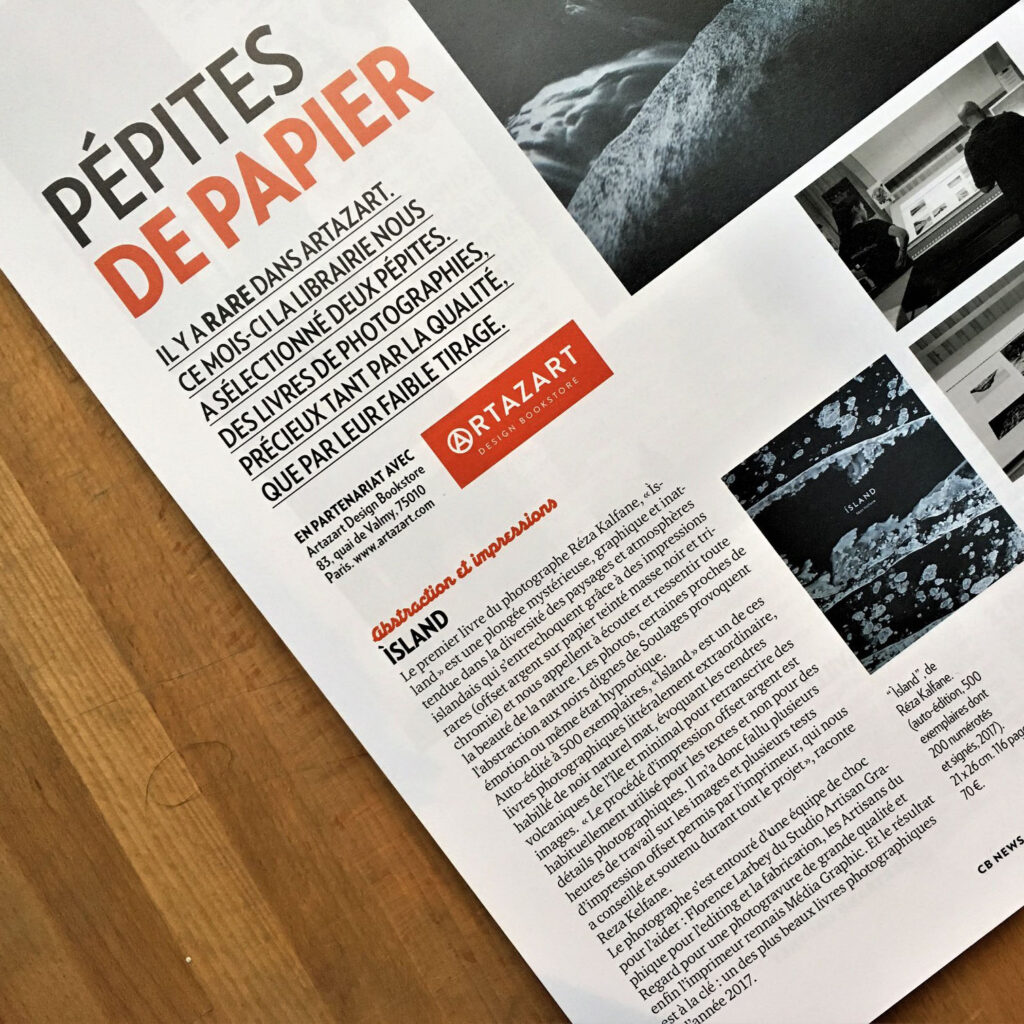
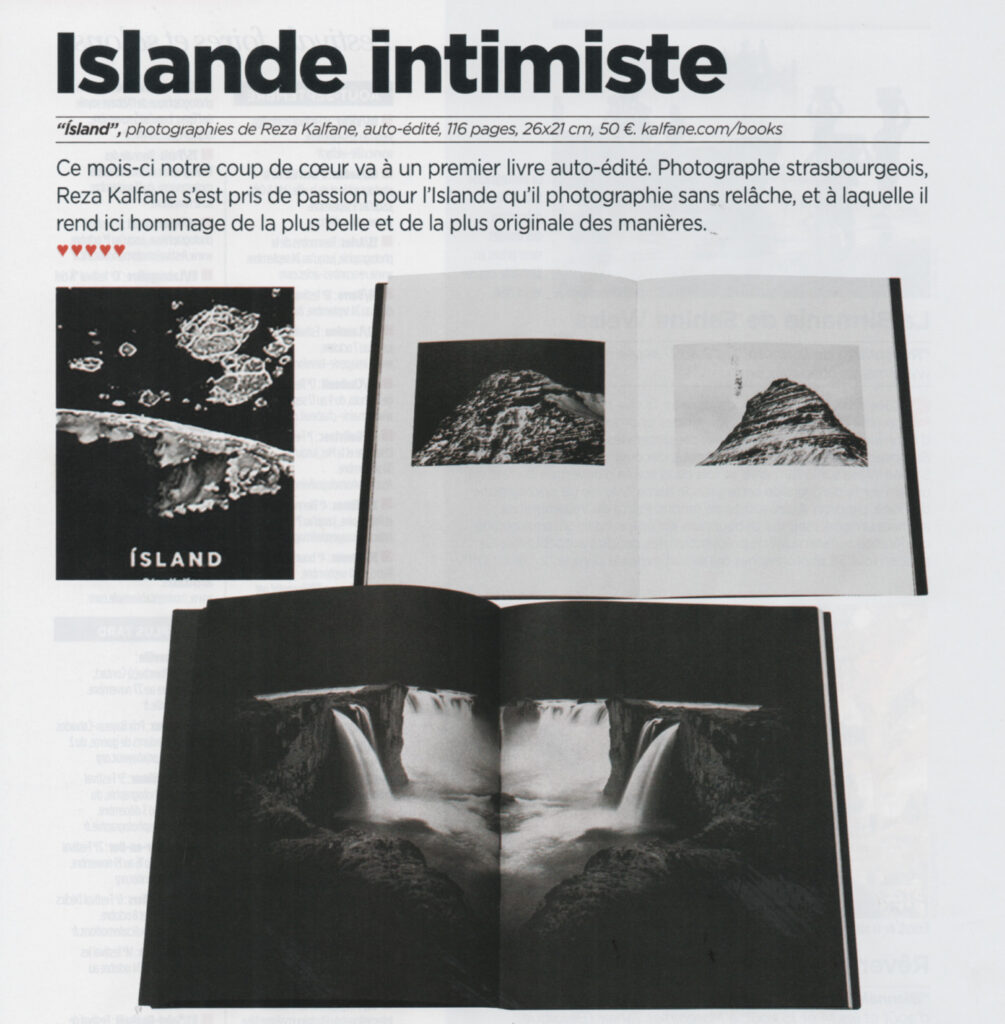
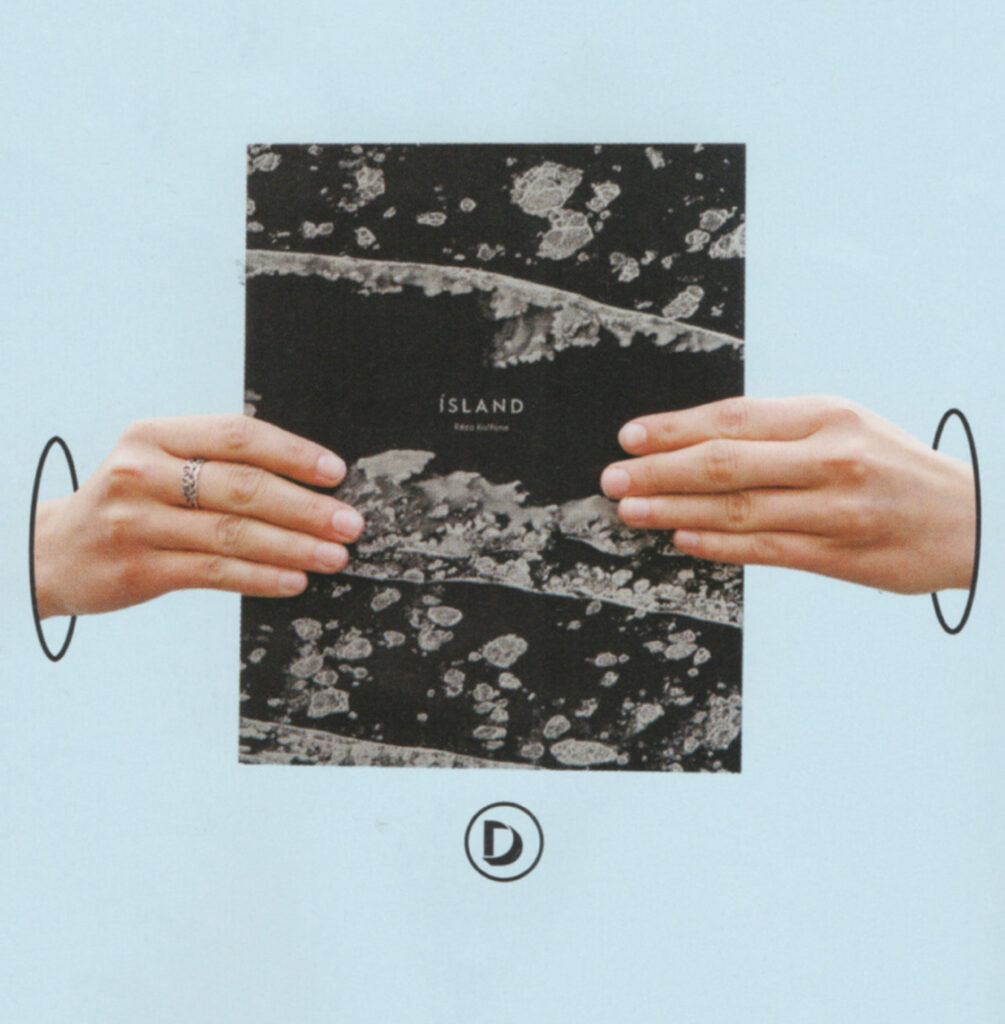
His photographic practice took him first to Iceland in 2012, the beginning of a sustained engagement with the Arctic Circle that has produced several publications, including the silver-on-black photography book Ísland (2017), and the GusGus 25 Year Anniversary Book. He has led photography expeditions to Iceland, Norway, Lapland, and the Faroe Islands, and exhibited in Reykjavik, New York, Switzerland, and France.
In recent years, Kalfane’s practice has shifted toward intermedia creation: designing and building instruments that fuse fabricated objects with bespoke electronic systems, microcontroller programming, generative sound, and live projection. He is a member of the Haus community, working across Hafnarhaus and Hlemmurhaus in Reykjavik, and a founding member of Absolumont, an intermedia collective with connections to the Intelligent Instruments Lab in Reykjavik. His time is divided between Brittany, France, and Iceland.
Absolumont
Co-founder of Absolumont, an intermedia collective exploring reality through experimental narration. absolumont.com
Press & Recognition
Polka Magazine, Fisheye Magazine, Réponses Photo, CB News. ÍSLAND nominated at La Nuit du Livre 2018; selected at Rencontres d’Arles 2017.